
For more than 25 years, Elizabeth’s connection to Child Crisis Arizona has been rooted in a shared commitment to children, families, and stronger communities. What began through her work as a school psychologist grew into a personal connection through foster care, advocacy, and a lifelong commitment to supporting causes that make a difference.
Elizabeth and her husband have fostered children, she has served as a Court Appointed Special Advocate (CASA), and she has continued to follow Child Crisis Arizona’s work across programs supporting children, families, and young adults in foster care. Her experiences have shaped not only her connection to our organization, but also the way she thinks about philanthropy and the legacy she hopes to leave.
As part of Make-A-Will Month, we asked Elizabeth to share more about her journey, what shaped her approach to giving, and why she chose to include Child Crisis Arizona in her legacy plans.
Tell us about your journey with Child Crisis Arizona. What first drew you in, and why have you continued to support the organization?
Elizabeth’s connection to Child Crisis Arizona began more than 25 years ago while she was working as a school psychologist for Mesa Public Schools. At the time, Child Crisis Arizona’s offices were located near her workplace, and she became familiar with the organization’s parenting classes. She often referred families she worked with to these programs, recognizing the value they provided to parents who were struggling with discipline and child-rearing challenges.
Her involvement deepened when she and her husband became foster parents through an agency that later merged with Child Crisis Arizona. They fostered three boys over the years and became increasingly familiar with the organization’s work. Beyond fostering, Elizabeth served as a Court Appointed Special Advocate (CASA), worked with children connected to Child Crisis Arizona’s residential programs, and followed the organization’s efforts in early childhood education and support for youth aging out of foster care.
She explained that so many of the causes she cares about—children, families, foster care, parenting support, and early education—intersect with the work of Child Crisis Arizona, making it a natural and meaningful organization for her to support.
Were there any people or events in your life that shaped your decision to support philanthropy?
Elizabeth described philanthropy as a lifelong practice that began in childhood. Raised in a Baptist church, she learned the importance of tithing at an early age, giving a portion of her weekly allowance to her church. She recalled that the habit of giving became deeply ingrained in her values and remained with her throughout her life.
When she married, she and her husband intentionally incorporated charitable giving into their financial planning. Together, they committed to giving a portion of their income each year and thoughtfully considered how those gifts would be distributed among causes that mattered to them.
What impact do you hope your gifts will have in the long term?
For Elizabeth, charitable giving is about making a real difference in people’s lives. She wants her gifts to sustain meaningful programs and address current needs.
She believes organizations should be judged by the services they provide and the impact they create. As long as an organization is effectively serving its mission, she is happy to support it. Ultimately, she hopes her gifts help organizations continue delivering valuable services that improve lives and strengthen communities.
Did anyone influence your decision to make a legacy gift?
Elizabeth explained that an estate planning attorney played an important role in helping her think strategically about her giving. Since she and her husband do not have children, they had originally planned to leave certain assets, including retirement accounts, to nieces and nephews.
Their attorney explained the tax advantages of naming charitable organizations as beneficiaries of retirement accounts while leaving other assets to family members. That conversation prompted Elizabeth to thoughtfully evaluate the organizations she cared most about and determine which ones she wanted to include in her legacy plans. Child Crisis Arizona was among those organizations because of its long-standing connection to her values and experiences.
You mentioned charitable giving through retirement accounts. Can you share more about that?
Elizabeth spoke passionately about Qualified Charitable Distributions (QCDs) and believes more people should be aware of this giving option. Once she reached the eligible age, she shifted much of her charitable giving to direct distributions from her IRA.
Rather than taking funds she did not need and paying taxes on them, she preferred directing those dollars to organizations making a difference in the community. She frequently discusses this strategy with friends and encourages others to explore tax-efficient ways to support causes they care about.
What does the word “legacy” mean to you personally?
When asked about legacy, Elizabeth was quick to say that recognition is not important to her. She does not seek buildings, programs, or opportunities named in her honor. Instead, she hopes to be remembered through the impact her gifts create.
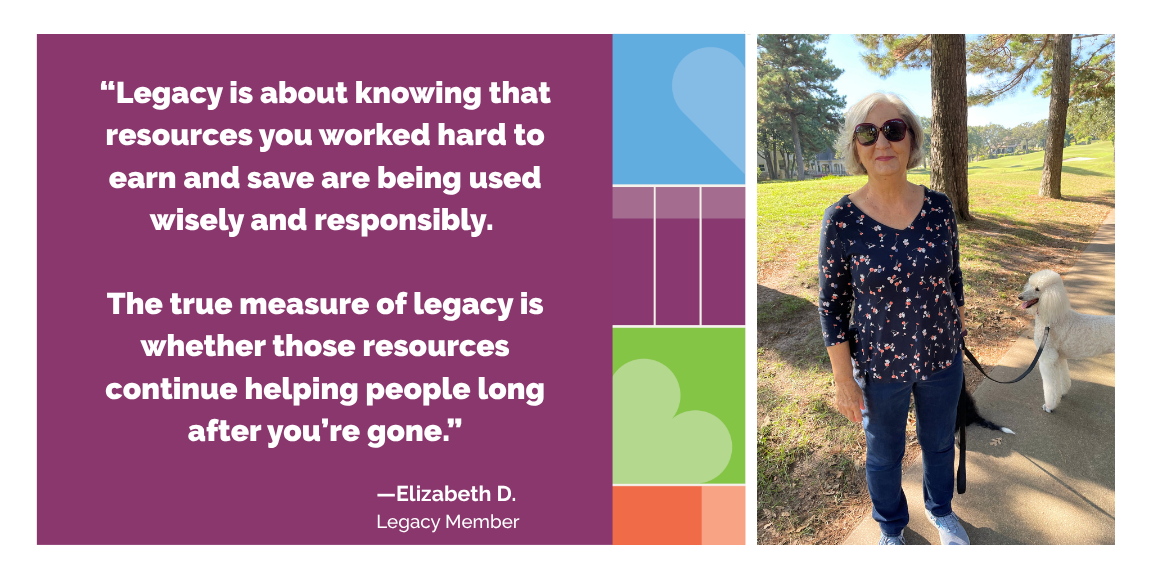
For her, legacy is about knowing that resources she worked hard to earn and save are being used wisely and responsibly. She wants her philanthropy to help sustain programs that matter and support organizations that are well-managed and mission focused.
The true measure of legacy, she believes, is whether those resources continue helping people long after she is gone.
What would you say to someone who is considering making alegacy gift but hasn’t taken that step yet?
Elizabeth acknowledged that conversations about money can often feel uncomfortable, which may prevent people from exploring legacy giving opportunities. Rather than telling others what they should do, she prefers to lead by example and share her own experiences.
She encourages people to think carefully about how their assets could make a difference after their lifetime. In many cases, she believes family members are already financially secure and may not need additional inheritances. At the same time, countless needs exist throughout the community and the world.
Inspired by the philanthropic philosophies of individuals like Warren Buffett and Bill and Melinda Gates, Elizabeth believes that wealth carries a responsibility to give back. She hopes others will consider how they can use their resources to create meaningful impact and support causes that align with their values.
Carrying Your Values Forward
Elizabeth’s story shows that a legacy can be shaped by the experiences, values, and causes that have mattered throughout a lifetime. For her, including Child Crisis Arizona in her legacy plans is one way to help ensure that children, families, and young adults in foster care continue to have access to the safety, support, and resources they need.
A legacy gift is a personal decision, and there are many ways to plan one. If you’re considering creating or updating your will, Child Crisis Arizona offers a free resource through FreeWill that makes it simple to get started. FreeWill allows you to create a legally valid will online at no cost, often in about 20 minutes. We invite you to explore this resource, consider the causes that matter most to you, and discover how your plans can help create a legacy for Arizona’s children and families.


